
A Samurai’s Musical Pivot:
The Rickshaw Driver Who Transformed the World of Music

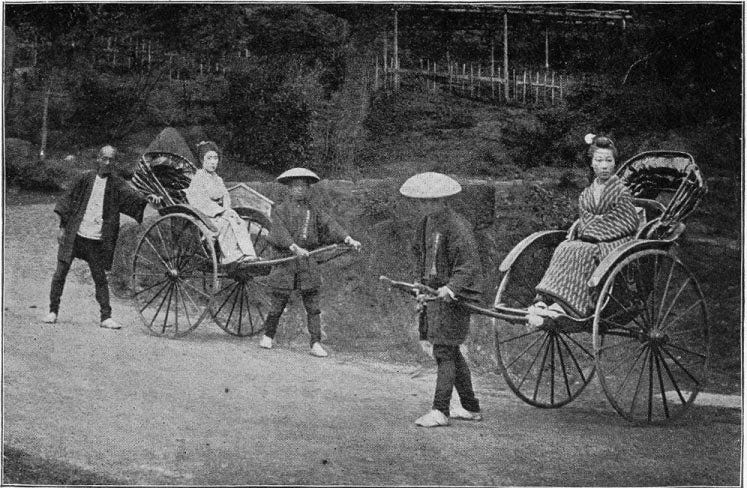
Did you know that the world’s largest musical instrument company, Yamaha Corporation, was started by an ex-samurai who knew nothing about music? In fact, he pulled a rickshaw for a living, and repaired watches as a side gig.
Take a moment and consider how that resume could launch a company that has produced untold beauty and joy around the globe for almost 150 years.
Born in 1851, the star of our unlikely musical drama was the the third son of a very low-ranking samurai. His name was Torakusu, and he came of age just as Japan was making the difficult transition to a modern society. With the stroke of a pen, the new Meiji government abolished the samurai class, along with their swords, top knots, and a millenium of cultural distinction.
This sudden change left many skilled warriors without a clear purpose or means of support. Men like Torakusu were everywhere in Japan. They bounced around, looking for any kind of work. Torakusu went to Nagasaki to learn watchmaking from an English engineer. Then, he got his “big break”—he became the rickshaw man for a hospital director in the town of Hamamatsu (a town roughly half-way between Nagoya and Tokyo).
Destiny’s Tap
That’s when destiny tapped our seedy samurai on the shoulder. In 1886, Torakusu was asked by the principal of a local elementary school to look at an imported reed organ. It was broken, and the school had no one else to ask.
Torakusu had no idea what a Western organ was supposed to sound like. But, thanks to his watchmaking apprenticeship in Nagasaki, he knew a broken spring when he saw it. He managed to repair the organ.
If he could repair an organ, perhaps he could build one. The community asked him to try. Every school wanted their own organ. Sadly, his prototype produced sound, but not music. The quality moniker “Made in Japan” still had a ways to go.
Determined to figure out why he failed so miserably, Torakusu slung his creation over his shoulder on a pole and carried it 200 miles across the mountains of Hakone to Tokyo. He sought guidance at what is now the Tokyo University of the Arts.
What a difference a year can make. He built a second prototype, better than the original import. Faster than you can sing “Do-Re-Mi,” the demand for imported reed organs disappeared. “Made in Japan” was a thing, after all.
Encouraged by supporters, Torakusu started a company named Nippon Gakki Co., Ltd. It did pretty well. A century later, the company was renamed the Yamaha Corporation, after its founder. Today, Yamaha is the world’s largest musical instrument company, as it has been for many decades.
A Real-life Samurai Pivot
The entire world has Yamaha Torakusu to thank for his musical Samurai Pivot. This rickshaw driver got a late chance in life, and created a lasting legacy in the world of music.
If you love music, you will be inspired by a visit to Yamaha’s “Innovation Road” in Hamamatsu. They call it a corporate museum. That does it no justice. Innovation Road traces the evolution of Yamaha’s creative prowess from Torakusu’s reed organ in 1887, to the very latest in electronic versions and synthesizers. The best part for any would-be musician is the chance to play an astonishing array of musical instruments.
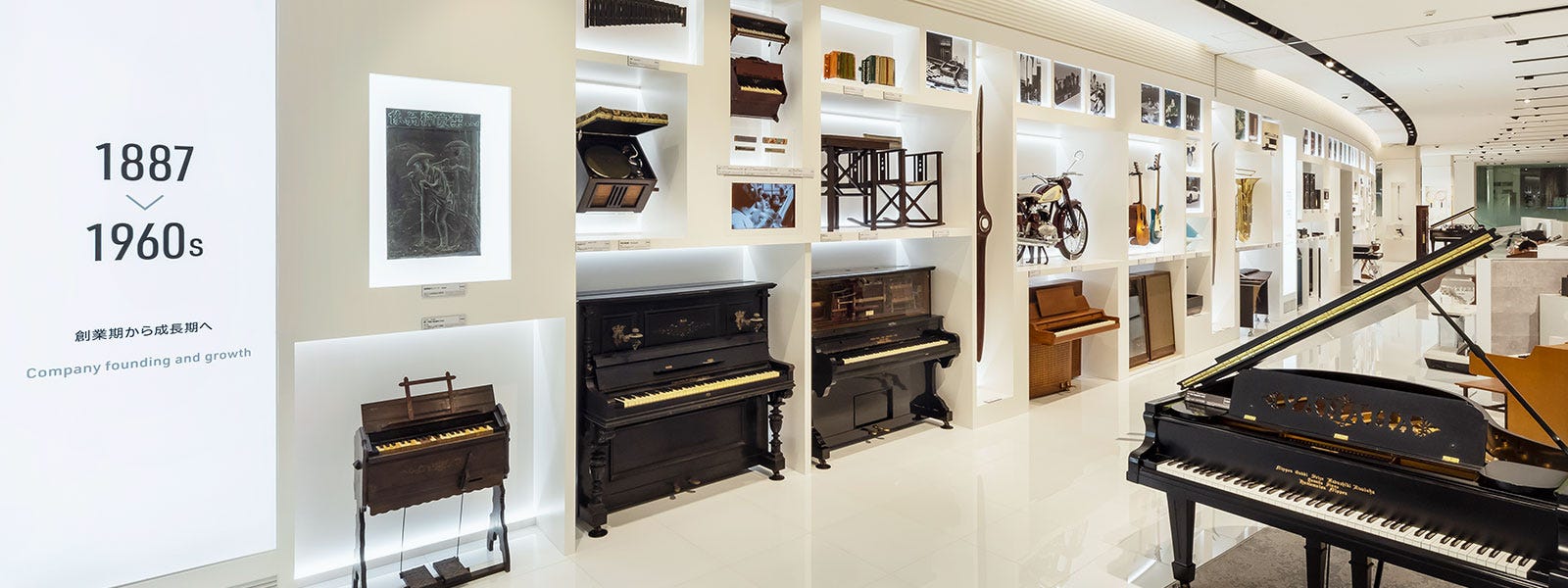
Mayumi, who trained extensively on the piano when she was young, got a chance to sit down and play a top-of-the-line concert grand piano. It was definitely an upgrade on the second-hand baby grand in our living room.
For the Love of Music
I love music, too. But people will pay me not to sing or play an instrument. I picked out a set of electronic drums, put on the headphones, and banged away in my imitation of the Muppet character Animal, and his fictional band Dr. Teeth and the Electric Mayhem. The folks at Innovation Road never blinked, and I love them for that.
As I explored the displays, I marveled at how Torakusu’s vision had evolved from simple reed organs to this pinnacle of musical technology. He set his company on the road to transforming mundane materials into magical waves of sound capable of moving the human heart.
How About Making Your Own Pivot?
Next time you tell yourself you can’t do something, I hope you’ll recall the image of a 35-year old ex-samurai pulling a rickshaw. That was the perfect experience for building an enduring human institution that has brought joy and delight to millions of people on a daily basis. The job search algorithms may ignore you. But the world might just be waiting to give you standing ovation.
All it takes is a Samurai Pivot. Why not take a moment and consider your own skills and attributes? What unexpected pivot might they enable in your life?
I’d love to hear about any pivots you have made, musical or not.